
A snake encounter can turn an ordinary walk, hike, or afternoon outdoors into a frightening emergency in seconds.
The most important thing to remember is that panic can make a dangerous situation worse. If someone is bitten by a snake, the priority is not trying to identify the snake from its bite marks or attempting a dramatic home remedy.
The priority is simple:
Keep the person still, avoid harmful first aid, and get professional medical treatment as quickly as possible.
Snakebite envenoming can cause serious problems involving the nervous system, blood clotting, breathing, kidneys, and tissues. Fortunately, effective medical treatment—including appropriate antivenom when indicated—is available for many venomous snake bites.
First, Don’t Try to Diagnose the Snake From the Bite
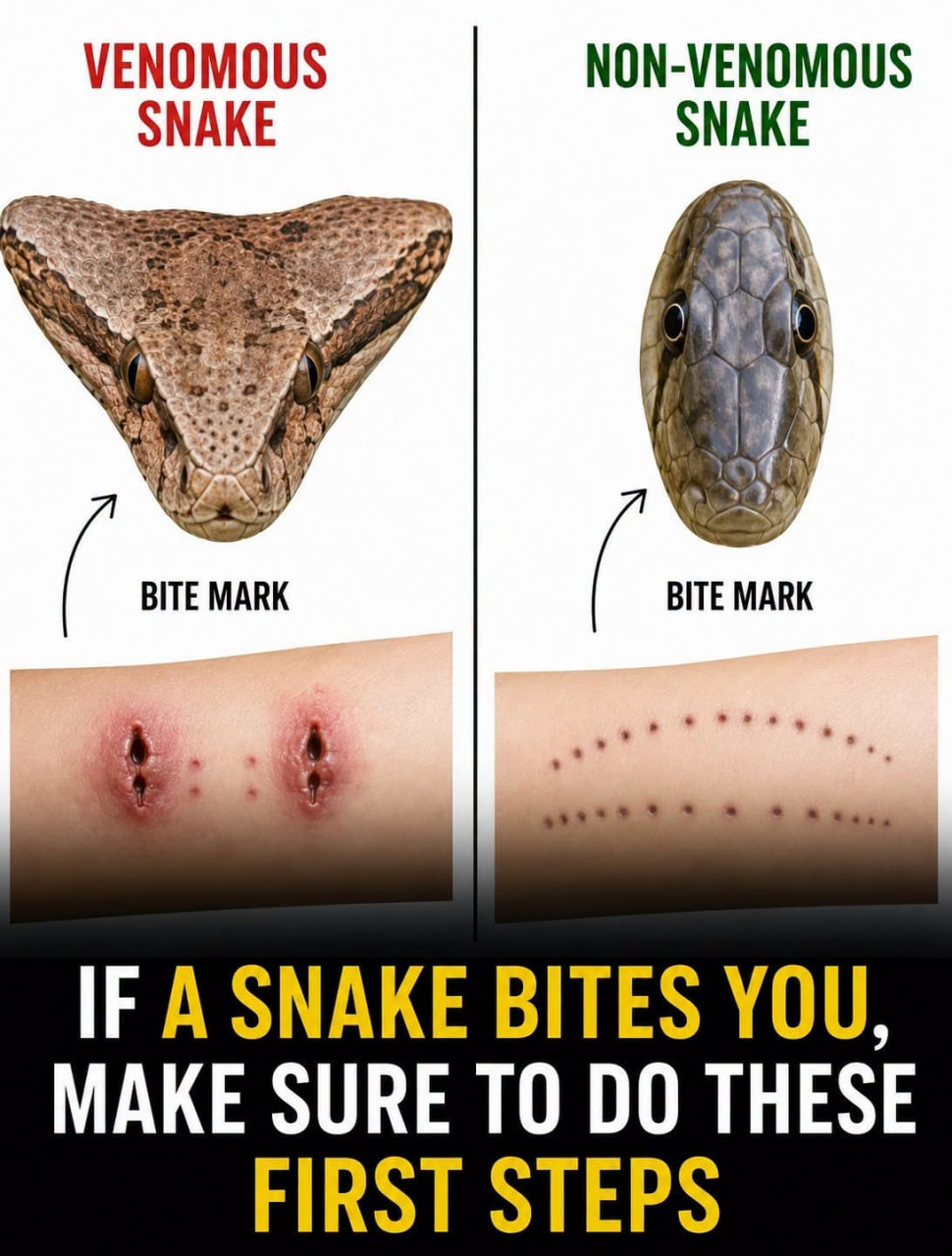
You may have seen images comparing the bite of a venomous snake with that of a non-venomous snake.
These illustrations can be misleading.
A bite wound alone cannot reliably tell you what species of snake caused it or whether venom was injected. Fang marks can vary, and some venomous bites may produce surprisingly little visible damage at first.
Likewise, the absence of dramatic symptoms does not necessarily mean the person is safe.
If a snake bite has occurred and there is any possibility that the snake was venomous, treat it as a medical emergency.
Step 1: Move Away From the Snake
The first priority is everyone’s safety.
Move away from the snake and avoid attempting to catch, kill, or handle it.
If the snake is still nearby, give it plenty of space.
Trying to capture a snake so that doctors can identify it can result in another bite. If it can be done safely from a distance, a photograph may help medical professionals identify the species, but never put yourself at risk to obtain one.
