
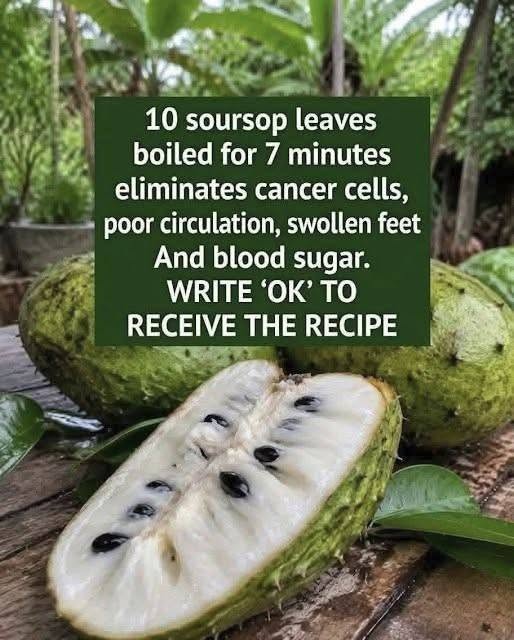
Soursop leaf tea has become increasingly popular on social media, with many posts claiming it can cure serious illnesses, eliminate cancer cells, lower blood sugar, improve circulation, and treat a wide range of health conditions. While these claims can sound convincing, it’s important to separate traditional herbal use from scientific evidence.
Soursop (Annona muricata), also known as graviola or guanábana, is a tropical tree valued for both its fruit and leaves. For generations, people in the Caribbean, Central and South America, West Africa, and Southeast Asia have prepared soursop leaf tea as part of traditional herbal practices.
Here’s what we currently know about soursop leaf tea, how it’s traditionally prepared, its possible health benefits, and the important safety precautions you should understand before drinking it.
What Is Soursop?
Soursop is a tropical fruit with a green, spiky exterior and soft white flesh inside. Its sweet, tangy flavor is often described as a blend of pineapple, strawberry, banana, and citrus.
While the fruit is commonly enjoyed fresh or used in smoothies, desserts, and juices, the leaves are often dried and brewed into herbal tea.
Unlike the fruit, soursop leaf tea has an earthy, mildly bitter flavor that resembles green tea or certain herbal infusions.
Traditional Uses of Soursop Leaf Tea
For centuries, herbal practitioners have used soursop leaves as a natural wellness drink.
Traditionally, the tea has been consumed to support:
- Relaxation and restful sleep
- Digestive comfort
- General wellness
- Occasional inflammation
- Healthy blood sugar balance
- Immune support
It’s important to understand that these are traditional uses based on cultural practices, not medically proven treatments.
Continue reading Recipe on the next page…
