
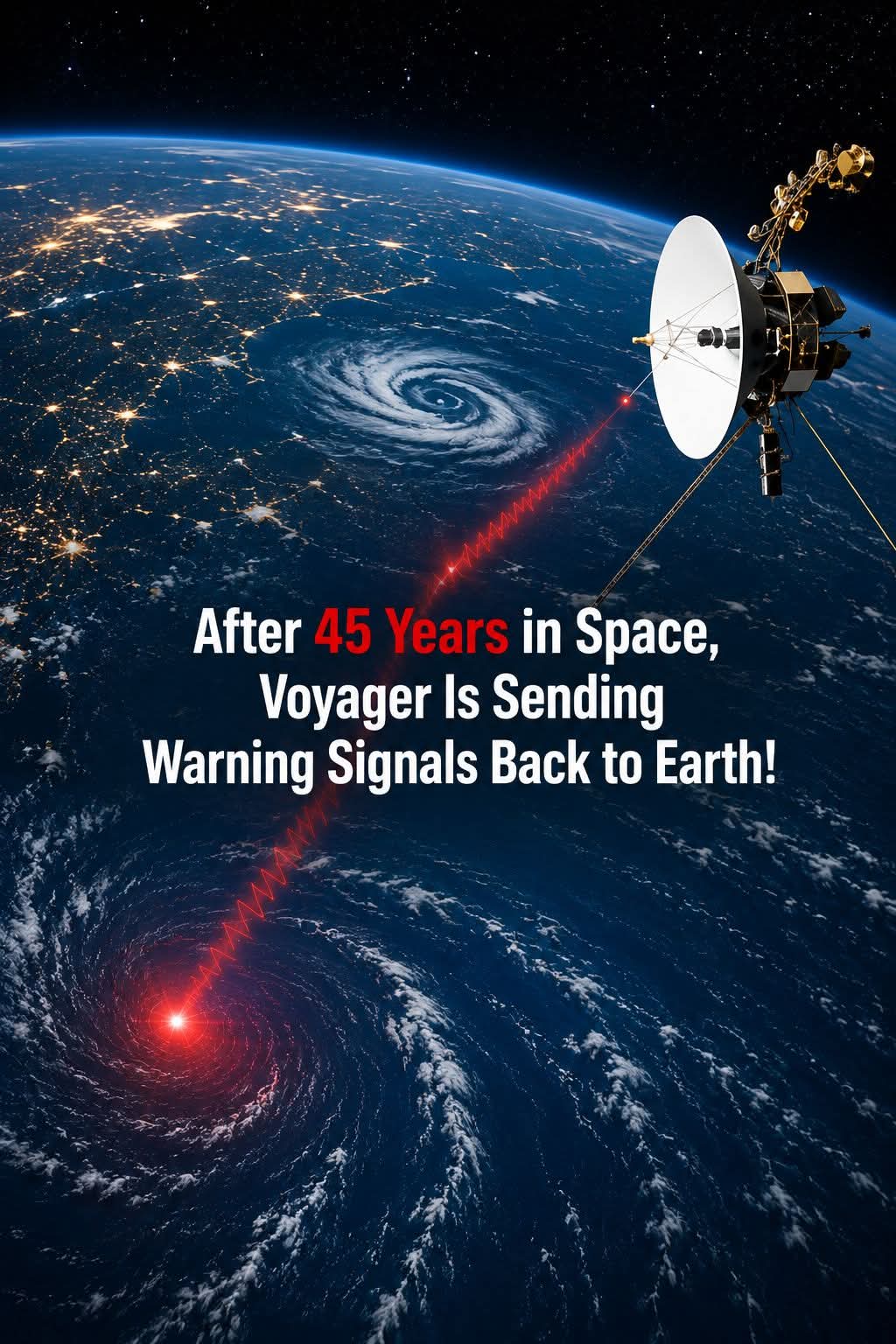
Voyager After 45 Years in Space: The Journey Continues
After more than four decades traveling through space, NASA’s Voyager spacecraft continue to operate far beyond their original mission expectations. Launched in 1977, they were initially designed for a short planetary exploration mission, but have since become the longest-running space probes in history.
Voyager 1 is now the most distant human-made object from Earth, having crossed the boundary of the heliosphere and entered interstellar space in 2012. Voyager 2 followed in 2018, making both spacecraft pioneers in exploring the region beyond our solar system.
Despite their extreme age and distance, both probes are still sending back valuable scientific data. They continue to study the interstellar medium—the space between stars—providing insights into cosmic rays, magnetic fields, and plasma waves that cannot be measured from Earth.
One of the biggest challenges the mission faces is power. The Voyagers are powered by radioisotope generators that slowly lose energy as their fuel decays. To extend their lifespan, NASA engineers have gradually turned off non-essential systems, preserving only the most important scientific instruments.
Over time, occasional technical issues have appeared due to aging hardware and radiation in deep space. However, mission teams have repeatedly managed to troubleshoot and recover functionality, allowing the spacecraft to keep transmitting data across billions of kilometers.
Even though both Voyagers are expected to eventually go silent, they will continue drifting through the galaxy for billions of years, carrying their famous Golden Records—messages from Earth intended for any potential intelligent life that might encounter them.
The mission remains a remarkable example of human engineering, turning a short-term planetary flyby mission into an interstellar journey that continues to expand our understanding of the universe.
