
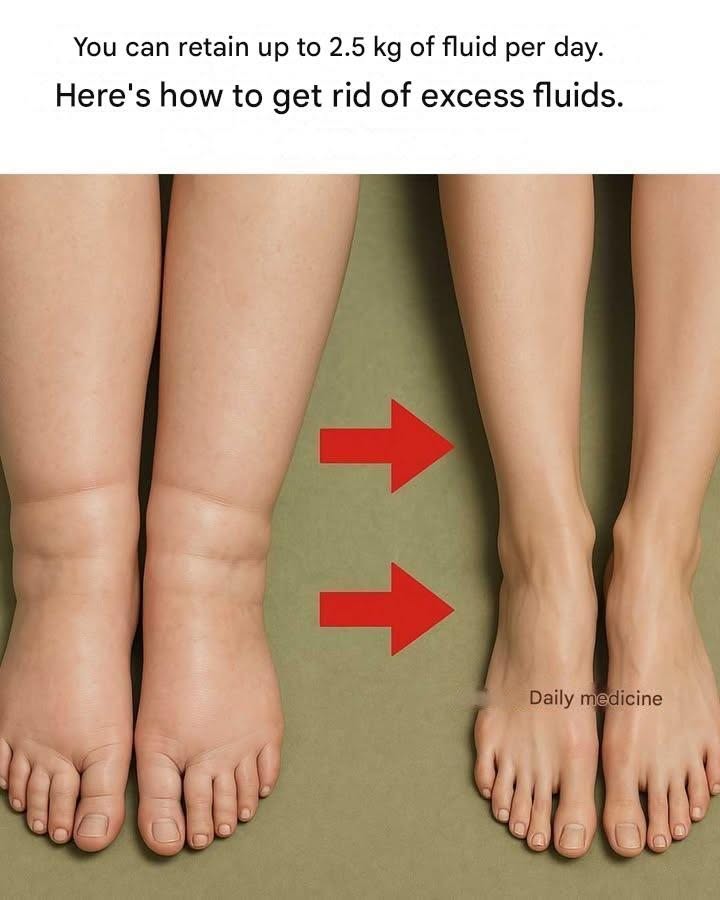
Many people experience fluid retention, also known as edema, which can make the body feel swollen or heavier than usual. Viral posts often claim that you can retain several kilograms of fluid in a single day and promise quick fixes. While temporary water retention is common, lasting or severe swelling may be a sign of an underlying health condition that should be evaluated by a healthcare professional.
What Is Fluid Retention?
Fluid retention occurs when excess fluid builds up in the body’s tissues. It most commonly affects the:
- Feet and ankles
- Legs
- Hands
- Fingers
- Face
In many cases, it’s temporary and improves once the underlying cause is addressed.
Common Causes
Water retention can be triggered by several factors, including:
- Eating too much salt
- Sitting or standing for long periods
- Hormonal changes
- Hot weather
- Certain medications
- Pregnancy
- Heart, kidney, or liver conditions
Identifying the cause is important, especially if swelling is frequent or severe.
Symptoms of Fluid Retention
Signs may include:
- Swollen feet, ankles, or hands
- Puffy skin
- Tight-fitting rings or shoes
- Rapid weight changes over a short period
- Skin that leaves an indentation when pressed (pitting edema)
If swelling appears suddenly or is accompanied by pain or shortness of breath, seek medical attention immediately.
Healthy Ways to Reduce Mild Water Retention
For temporary, mild fluid retention, these habits may help:
- Drink enough water throughout the day.
- Reduce excess sodium in your diet.
- Eat potassium-rich foods such as bananas, spinach, and sweet potatoes.
- Stay physically active.
- Elevate your legs if your feet or ankles are swollen.
- Avoid sitting or standing in one position for extended periods.
These lifestyle changes often help the body regulate fluid balance naturally.
When to See a Doctor
Contact a healthcare provider if:
- Swelling is severe or persistent.
- Only one leg becomes swollen and painful.
- You experience chest pain or difficulty breathing.
- Swelling is accompanied by redness, warmth, or fever.
- You have a history of heart, kidney, or liver disease.
Persistent edema may require medical evaluation and treatment.
Final Thoughts
Fluid retention is common and is often temporary, especially after eating salty foods, traveling, or spending long periods on your feet. However, dramatic claims about losing large amounts of retained fluid overnight are usually exaggerated. A balanced diet, regular exercise, proper hydration, and medical evaluation when needed are the safest and most effective ways to manage fluid retention.
