
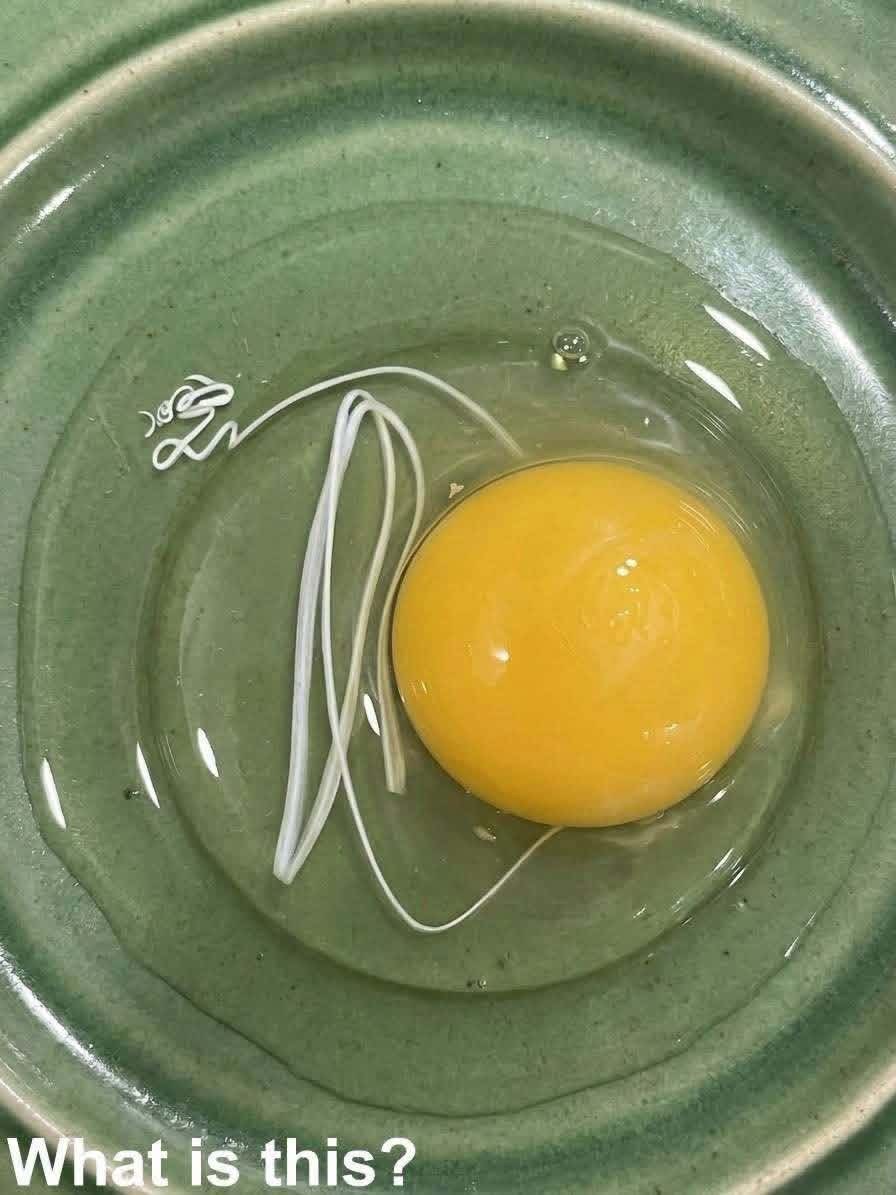
Absolutely.
The chalaza is:
- Completely edible
- Safe to consume
- Rich in protein
- Naturally present in healthy eggs
Many people eat it without even noticing because it blends into the egg during cooking.
Does a Large Chalaza Mean Anything?
Yes. A prominent white string is often a sign of freshness.
Fresh eggs typically have:
- Stronger, more visible chalazae
- Firmer egg whites
- Well-centered yolks
As eggs age, the chalaza gradually becomes less noticeable.
Common Myths
Myth: The White String Means the Egg Is Fertilized
False. Both fertilized and unfertilized eggs contain chalazae.
Myth: It Indicates Spoilage
False. In fact, a visible chalaza usually suggests the egg is relatively fresh.
Myth: It Should Be Removed
False. There is no need to remove it unless you prefer to for appearance reasons.
How to Tell If an Egg Is Bad
Instead of looking at the chalaza, watch for these signs:
- Unpleasant sulfur-like odor
- Discolored egg white or yolk
- Cracked shell with leakage
- Unusual mold growth
If an egg smells normal and looks normal, the white string is nothing to worry about.
