
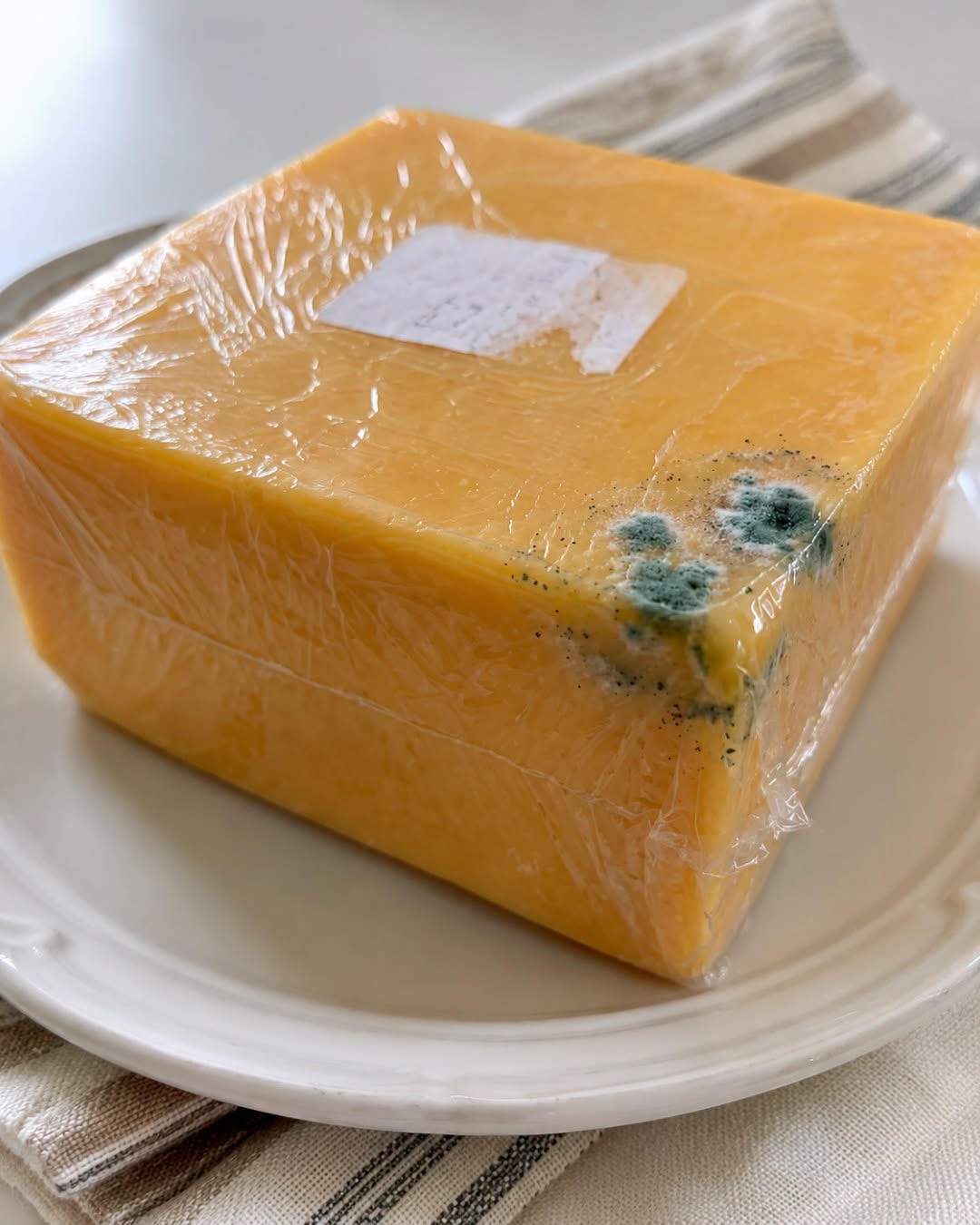
Finding a green, blue, or fuzzy spot on a block of cheddar cheese can be alarming. Your first instinct might be to throw the entire block in the trash—but is that always necessary?
The answer depends on the type of cheese, how much mold is present, and where it appears. Food safety experts have clear recommendations that can help you decide whether your cheese is still safe to eat.
Here’s what you need to know.
Why Does Mold Grow on Cheese?
Mold is a type of fungus that spreads through tiny airborne spores. Given the right conditions—moisture, warmth, and time—these spores can grow on food.
Cheese can develop mold because of:
- Exposure to air
- Improper storage
- Excess moisture
- Extended storage time
- Cross-contamination from other foods
While some molds are intentionally used to make specialty cheeses, unexpected mold on cheddar is a different situation.
Not All Mold Is Dangerous
It’s important to distinguish between intentional mold and unwanted mold.
Cheeses such as:
- Blue cheese
- Roquefort
- Stilton
- Gorgonzola
are made using carefully selected mold cultures that are safe to eat.
Cheddar, however, is not intended to develop visible mold during storage.
Hard Cheese vs. Soft Cheese
The biggest factor is whether the cheese is hard or soft.
Hard Cheeses
Hard cheeses include:
- Cheddar
- Parmesan
- Swiss
- Gouda
- Pecorino
Because these cheeses are dense, mold usually cannot spread very deeply into the interior.
If only a small area has mold, food safety guidance generally recommends:
- Cutting away at least 1 inch (2.5 cm) around and below the moldy area.
- Avoiding contact between the knife and the mold itself.
- Wrapping and storing the remaining cheese properly.
The unaffected portion is often still safe to eat.
Soft Cheeses
Soft cheeses include:
- Cottage cheese
- Cream cheese
- Ricotta
- Brie
- Camembert (unless mold is part of the cheese)
- Fresh mozzarella
For these cheeses, visible mold usually means the entire product should be discarded.
Their higher moisture content allows mold and bacteria to spread throughout the cheese, even when only a small spot is visible.
What If the Mold Is Green?
Green mold is one of the most common types found on aged foods.
Its color alone doesn’t determine whether it’s dangerous. Since it’s difficult to identify mold species by appearance, experts recommend following food safety guidelines based on the type of cheese rather than the color of the mold.
Signs You Should Throw the Cheese Away
Discard the entire block if you notice:
- Extensive mold covering multiple areas
- Strong unpleasant odors
- Slimy texture
- Cracks filled with mold
- Excessive moisture or leaking liquid
- Mold on shredded, crumbled, or sliced cheese
When in doubt, it’s safer to replace the cheese.
How to Cut Mold Off Hard Cheese Properly
If you’re dealing with a firm block of cheddar and only one small moldy spot:
- Use a clean knife.
- Cut at least 1 inch (2.5 cm) around the mold.
- Remove a generous portion beneath the mold as well.
- Avoid touching the mold with the knife before cutting into the clean section.
- Store the remaining cheese in fresh wrapping.
This helps prevent accidental spread of mold spores.
Preventing Mold Growth
To keep cheddar fresh longer:
- Store it in the refrigerator.
- Wrap it in cheese paper, wax paper, or parchment paper before placing it in a loose plastic bag or container.
- Avoid trapping excess moisture.
- Keep cheese away from foods that spoil quickly.
- Use clean utensils when cutting or serving.
Proper storage can significantly extend the life of hard cheeses.
Frequently Asked Questions
Can cooking kill mold?
Cooking may kill some mold cells, but certain molds can produce toxins that remain even after heating. It’s not recommended to rely on cooking to make moldy food safe.
Is shredded cheddar different?
Yes. Because shredded cheese has many exposed surfaces, mold can spread more easily. If mold appears, it’s safest to discard the entire package.
Does freezing stop mold?
Freezing slows mold growth but doesn’t eliminate existing mold or its spores. Freeze only fresh, mold-free cheese.
The Bottom Line
Finding a small green spot on a block of cheddar doesn’t always mean the entire block has to be thrown away. Because cheddar is a hard cheese, food safety experts generally recommend cutting away the moldy area with at least 1 inch (2.5 cm) of surrounding cheese if the mold is limited to a small spot.
However, if the cheese is soft, heavily moldy, has an unusual smell, or shows signs of spoilage beyond a single patch, it’s safest to discard it.
When it comes to food safety, if you’re ever unsure about whether a food is safe to eat, replacing it is often the safest choice.
