
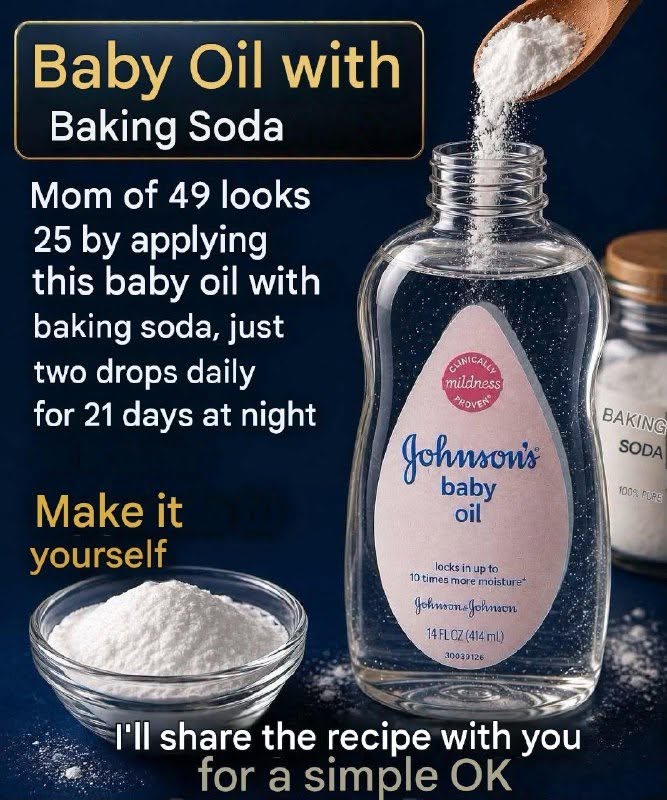
Potential Risks
Using baking soda on the face too often can lead to:
- Dry patches
- Burning sensations
- Increased sensitivity
- Skin irritation
- Disruption of the skin’s natural protective barrier
People with eczema, rosacea, acne, or sensitive skin may be especially vulnerable to irritation.
Safer Ways to Improve Skin Appearance
If your goal is healthier, younger-looking skin, experts recommend focusing on habits that have much stronger scientific support:
- Apply sunscreen every day.
- Use a gentle moisturizer suited to your skin type.
- Consider ingredients such as retinoids, vitamin C, niacinamide, or hyaluronic acid.
- Stay hydrated.
- Eat a balanced diet rich in fruits and vegetables.
- Get adequate sleep.
- Avoid smoking and excessive sun exposure.
These approaches are backed by much more evidence than viral DIY beauty hacks.
If You Still Want to Try It
If you’re curious about the mixture despite the risks:
- Test it on a small patch of skin first.
- Avoid the eye area.
- Do not use it every day.
- Stop immediately if redness, burning, or irritation develops.
Using baby oil alone as a moisturizer for very dry skin is generally much safer than combining it with baking soda.
The Bottom Line
Baby oil can help keep skin moisturized and temporarily improve its appearance by reducing water loss. Baking soda, however, is much harsher on the skin and may cause irritation when used regularly.
Despite viral claims, there is no evidence that this combination can make someone look decades younger or permanently reduce wrinkles. Healthy skin is best achieved through consistent skincare habits, sun protection, and products that have been tested for both safety and effectiveness.
