
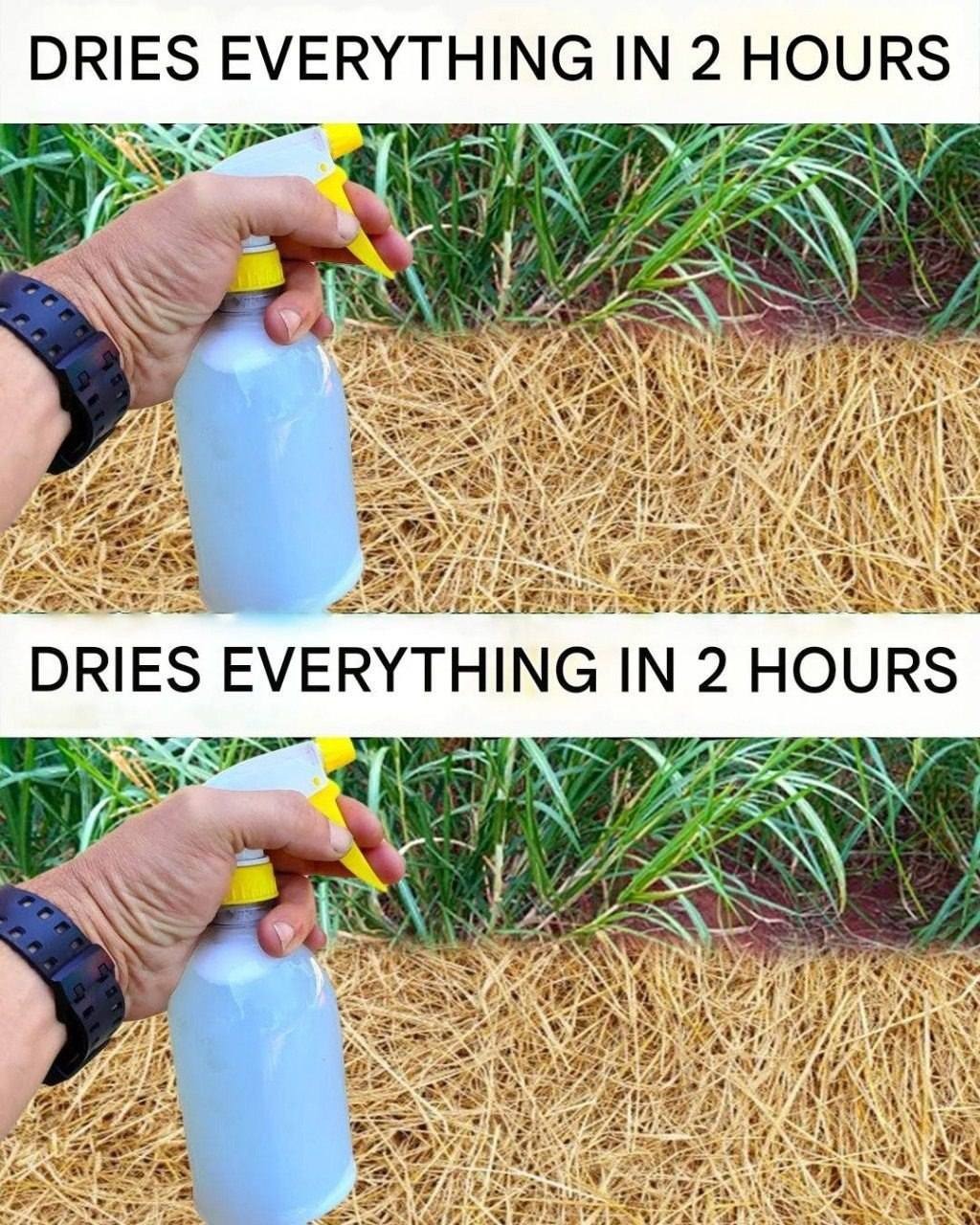
Understanding the expected timeline prevents the disappointment that comes from giving up too early or over-applying unnecessarily.
Within 2 to 6 hours after application on a hot, sunny day: You may begin to see wilting and some change in leaf color, particularly on young, tender weeds.
Within 24 hours: Visible browning and wilting on most small to medium weeds. Annual weeds and young seedlings will typically appear clearly dying.
Within 48 to 72 hours: Most treated weeds show significant browning, collapse, and desiccation. Young and annual weeds are typically dead or dying.
Within 1 to 2 weeks: Full visible death of most treated weeds. Perennial weeds with deep root systems may show regrowth from the roots, requiring additional treatment.
Important expectation management: This homemade herbicide works primarily on the above-ground portion of the plant. Annual weeds — those that complete their lifecycle in one season — are killed effectively because destroying the foliage prevents photosynthesis and the plant has no established root reserve to recover from.
Perennial weeds — dandelions, bindweed, thistles, ground elder, and similar deep-rooted species — may show top growth death but regrow from their roots. For perennial weeds, repeated applications over the course of a season, combined with physical removal of as much root system as possible, will gradually exhaust the plant’s stored energy. Complete elimination of established perennial weeds with any herbicide — homemade or commercial — is a process of attrition rather than a single treatment.
Where This Herbicide Works Best
Ideal Applications — High Effectiveness
Driveway and sidewalk cracks: This is where homemade herbicide truly excels. Weeds growing in concrete, asphalt, or paving cracks have limited root systems and no beneficial plants nearby that could be harmed. The concentrated application directly into the crack, combined with salt accumulation that suppresses future germination, makes this the most satisfying and effective application.\
Gravel paths and gravel driveways: Regular application on gravel paths maintains a clean, weed-free surface without the ongoing labor of hand-pulling. Salt accumulation in gravel is a feature rather than a concern here, as nothing desirable will grow in the gravel regardless.
Patio and deck joints: The gaps between paving stones or deck boards are perfect for targeted application — weeds treated here are in a completely isolated environment.
Garden path edges: The border between a garden path and a flower bed is a high-weed-traffic zone. Careful application along the path side of the edge keeps paths clean without affecting the bed.
Fence lines and boundary areas: Along fence lines where nothing else is intended to grow, regular applications control the grass and weeds that accumulate.
Use With Greater Care — Moderate Effectiveness and Risk
Garden beds with isolated weeds: Effective if applied with precision and without affecting nearby desirable plants. Use a targeted spray bottle rather than a wider garden sprayer, and consider physical barriers to protect neighboring plants during application.
Lawn weed spot treatment: Can be used on isolated lawn weeds, but the solution will also kill grass in the treated area, leaving a bare patch. Plan for overseeding the treated area after the weed is eliminated.
Avoid — Not Appropriate for These Areas
Broadcast application across vegetable gardens: Salt accumulation will damage soil structure and affect subsequent planting. Physical weeding is more appropriate in active growing areas.
Near bodies of water: Salt runoff into ponds, streams, or drainage areas can affect aquatic ecosystems.
Slopes with rainfall runoff risk: Salt from treated areas can run off into surrounding plant areas with rainfall — plan application timing to minimize this risk.
Areas with valuable established trees or shrubs nearby: Tree roots extend far beyond the drip line, and significant salt accumulation in the soil within a tree’s root zone can damage even established mature trees over time.
Enhancing Effectiveness — Additions and Modifications
The base recipe above is effective as written. Several additions can enhance its performance for specific applications:
Add White Vinegar for Increased Acidity
Replacing all or part of the water with undiluted white vinegar (5% acetic acid) significantly increases the herbicidal effect of the solution. The acid directly damages plant cell walls and the waxy cuticle, enhancing penetration of the salt and baking soda.
Enhanced recipe with vinegar:
- 500 ml undiluted white vinegar (instead of water)
- 1 tablespoon salt
- 1 tablespoon baking soda
- 5 tablespoons liquid dish soap
Note: Adding baking soda to vinegar causes a fizzing reaction as they neutralize each other — this is normal and subsides quickly. Add the baking soda last and allow the fizzing to settle before transferring to a spray bottle.
This enhanced version is significantly more aggressive than the water-based formula and should be used with even greater care around desirable plants.
Add Citrus Essential Oil for Increased Penetration
A few drops of orange or lemon essential oil contains d-limonene, a natural compound that enhances surfactant action and improves penetration through the waxy plant cuticle. Add 10 to 15 drops to the basic recipe for improved effectiveness on waxy-leaved weeds.
Use Boiling Water for Immediate Results
For weeds in very confined spaces — a single crack in a driveway, an isolated clump between stepping stones — pouring boiling water directly onto the weed is one of the most immediately effective and completely non-chemical methods available. It kills by thermal shock. Combine with the herbicide spray for a two-stage treatment: boiling water for immediate kill, followed by the salt-based spray to prevent regrowth.
Homemade Herbicide vs. Commercial Weed Killers — An Honest Comparison
Understanding the genuine differences between this homemade approach and commercial alternatives helps you make the right choice for your specific situation.
Speed of action: Commercial glyphosate-based herbicides (like Roundup) are typically faster-acting than this homemade formula on established perennial weeds, as they are taken up systemically and transported to the roots. The homemade formula works faster on annual weeds and aboveground kill on most plants.
Effectiveness on perennial weeds: Commercial systemic herbicides have an advantage on deeply-rooted perennial weeds because they kill the roots as well as the foliage. The homemade formula addresses the roots indirectly through repeated applications.
Safety profile: The homemade formula wins on safety around children, pets, and beneficial insects. Commercial herbicides — particularly glyphosate — remain the subject of ongoing research and legal scrutiny regarding their health and environmental impacts.
Soil effects: Both approaches can affect soil health. Salt accumulation from homemade herbicide affects soil structure and plant-available water in treated areas. Glyphosate is associated with effects on soil microbial communities. Neither should be broadcast-applied across productive growing areas.
Cost: The homemade formula is dramatically less expensive than commercial products, using ingredients that cost a few cents per application.
Practical conclusion: For driveways, paths, cracks, and non-growing areas, this homemade formula is an excellent choice that matches or exceeds commercial performance for these applications. For large areas with severe perennial weed infestations that require whole-root kill, a professional assessment may be warranted.
Environmental Considerations — What You Need to Know
Calling this formula “non-toxic” is accurate in relative terms compared to synthetic herbicides, but it’s important to be specific about what that means and what it doesn’t.
Salt is a genuine environmental concern in large quantities or in sensitive areas. It accumulates in soil, reduces water availability to plants, and at high concentrations can render soil unsuitable for plant growth for extended periods. Using the minimum effective amount, applying only where needed, and avoiding application near waterways or productive soil are all important practices.
Dish soap, while biodegradable, should still be kept out of waterways where it can affect aquatic ecosystems. The volumes used in garden applications are generally too small to cause concern with normal use.
The formula does not discriminate between weeds and desirable plants — it will kill anything it contacts with adequate coverage. “Non-toxic” refers to the absence of synthetic persistent chemicals, not to safety for all plants.
Used thoughtfully and precisely, this formula is one of the most environmentally responsible weed control approaches available.
Prevention — Making Weed Control Easier Long-Term
The most effective weed management strategy combines active treatment with prevention practices that reduce the rate at which new weeds establish:
Mulch garden beds deeply. A 3 to 4 inch layer of organic mulch — wood chips, straw, shredded leaves — blocks sunlight from reaching weed seeds in the soil and dramatically reduces germination. This single practice reduces garden bed weeding by more than any other approach.
Fill cracks and gaps promptly. Seal driveway and patio cracks with appropriate filler material to eliminate the establishment sites that weeds exploit. No gap means no foothold.
Hand-pull weeds before they seed. A weed that has not yet flowered and set seed is a contained problem. A weed that has gone to seed has deposited hundreds of future problems into your soil. Pulling weeds at the bud stage prevents the exponential expansion of the weed seed bank in your garden.
Water garden plants, not weeds. Drip irrigation that delivers water directly to plant root zones reduces water availability on the open soil surface where weed seeds germinate. Broadcast sprinkler irrigation waters the entire bed surface equally, favoring weed establishment.
Maintain dense planting. Weeds establish most easily in bare soil. Dense planting of desirable ground covers, perennials, or mulch prevents the open soil conditions that weeds require.
