
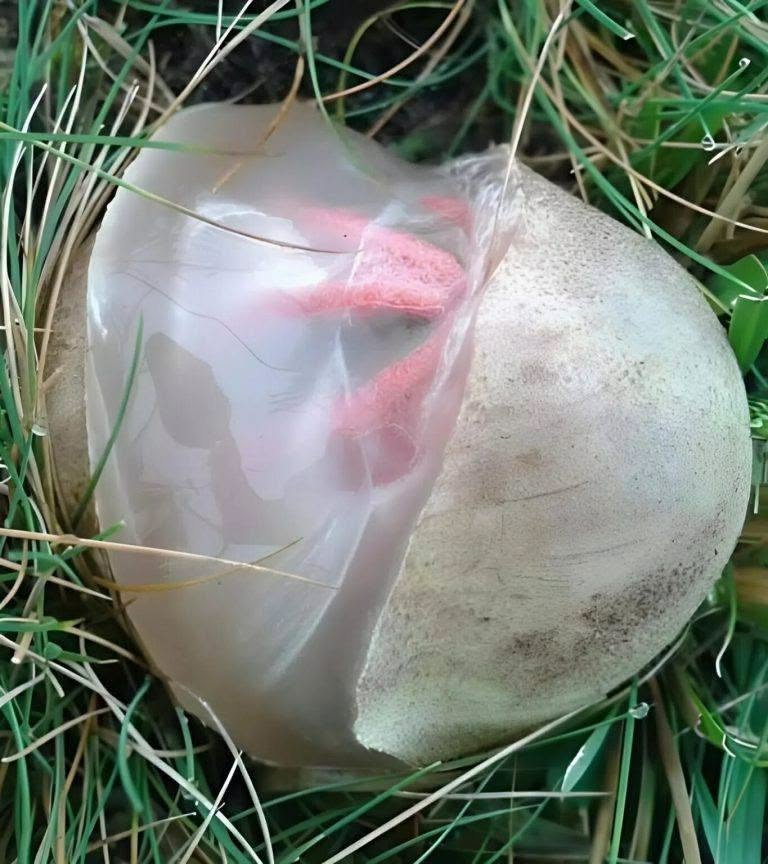
If you discover a strange, pale, egg-shaped object growing in your garden, lawn, or beneath a layer of mulch, you may have encountered one of nature’s more unusual fungi: a stinkhorn.
At first glance, a stinkhorn “egg” can look nothing like a mushroom. It may resemble a small white or gray ball partially buried in the soil. But inside that unusual structure is a developing fungus preparing for one of the fastest transformations in the fungal world.
What Is a Stinkhorn Egg?
The object commonly called a “stinkhorn egg” is the immature stage of a stinkhorn fungus.
Before the familiar mushroom-like structure emerges, the developing fungus is enclosed inside a protective outer layer called the peridium. Depending on the species, the egg can be white, cream, grayish, or slightly pink.
Inside, the mature reproductive structure is already developing.
When environmental conditions are suitable, the fungus can break through the outer layer and rapidly expand above the ground.
The Transformation Can Be Surprisingly Fast
One of the most fascinating things about stinkhorns is how quickly they can develop.
After the immature egg opens, the fruiting body may expand dramatically over a relatively short period. Some species can grow several centimeters in just a few hours.
This rapid growth is possible because much of the fungal structure has already been developed inside the egg. The fungus is essentially unfolding rather than constructing its entire body from scratch in a matter of hours.
