
Generally, there is little reason to handle a stinkhorn unnecessarily.
The mature fungus can be extremely smelly, and its spore material can be unpleasant to touch. If you have pets or young children who might investigate unusual objects in the garden, it is sensible to remove the fungus if necessary.
If you do remove one, wearing gloves and washing your hands afterward is a simple precaution.
Are Stinkhorns Dangerous?
Most stinkhorns are not considered dangerous simply because they appear in your yard.
However, identifying a mushroom solely from a photograph can be difficult because many fungal species can look similar at different stages of development.
For that reason, you should not assume that an unidentified wild fungus is edible.
Some young stinkhorns are reportedly eaten in certain cultures, but that does not mean every mushroom that resembles a stinkhorn is safe to consume. Proper identification by someone experienced with local fungi is essential before eating any wild mushroom.
Do You Need to Get Rid of Them?
Not necessarily.
Stinkhorns are temporary fruiting bodies of fungi that live in the surrounding organic material. Removing the visible mushroom may improve the appearance or smell of an area, but it does not necessarily eliminate the underlying fungal network.
If stinkhorns repeatedly appear in mulch, reducing or replacing heavily decomposed organic material may help reduce their occurrence.
In many cases, however, they disappear naturally as environmental conditions change.
A Strange but Important Part of Nature
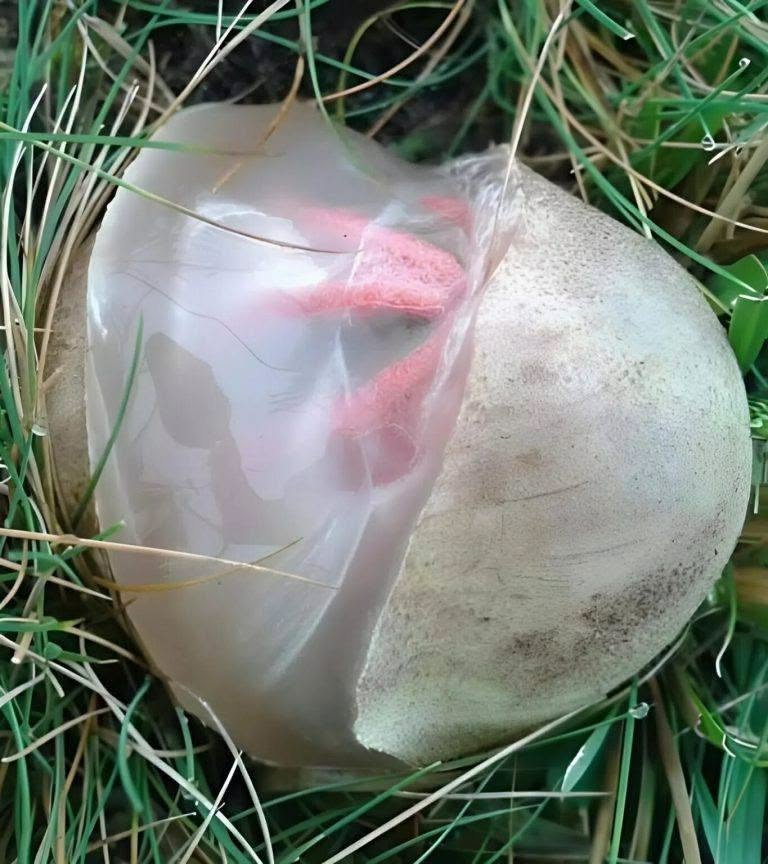
The stinkhorn “egg” may look bizarre, but it represents an impressive example of fungal biology.
Hidden beneath its unusual outer layer is a developing reproductive structure that can emerge rapidly, produce a powerful odor, attract insects, and disperse spores to new locations.
So if you find one in your garden, you may not have discovered something harmful or mysterious at all.
You have simply caught one of nature’s strangest mushrooms at the beginning of its transformation.
