
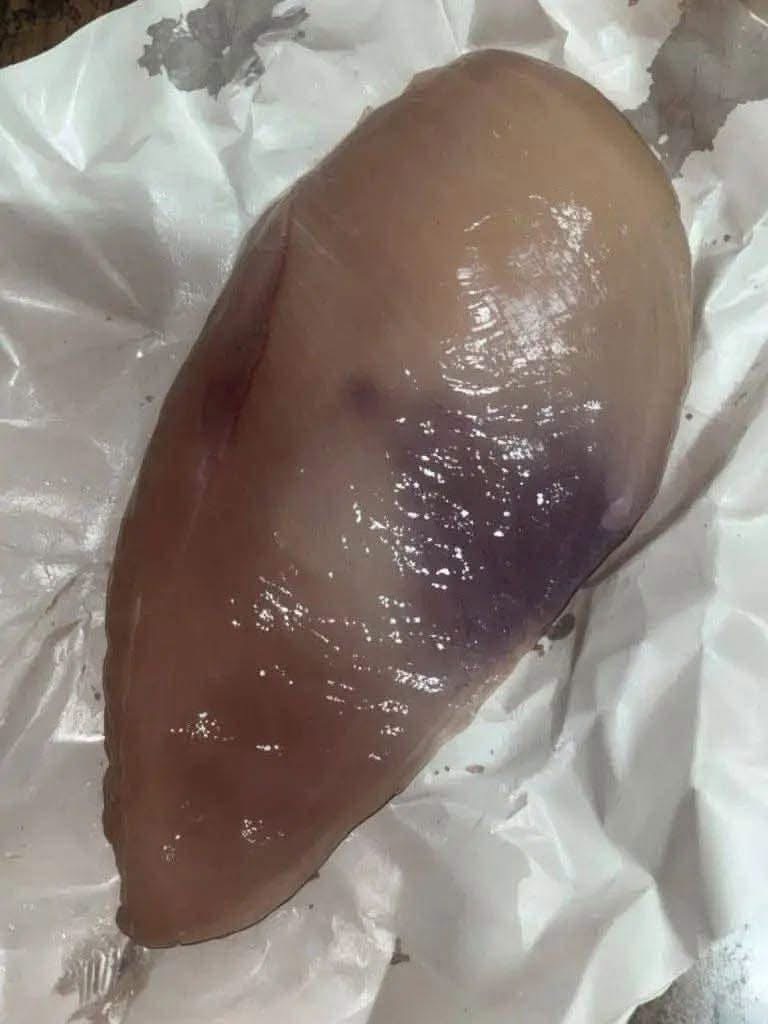
Bone Marrow Can Affect the Color
One of the most common reasons for purple spots is bone marrow.
Young chickens have softer, more porous bones than older birds. During processing, freezing, or cooking, pigments from the bone marrow can sometimes seep into the surrounding meat.
This often creates:
- Purple patches
- Dark red areas
- Bluish discoloration near bones
Although it may look unusual, it is generally harmless if the chicken has been stored properly.
Bruising Can Also Occur
Like other animals, chickens can develop bruises.
A bruise may happen during handling, transportation, or processing before packaging.
Bruised areas often appear:
- Purple
- Blue
- Dark red
These bruises are usually localized and do not necessarily affect the safety of the meat.
Freezing Can Change Appearance
If chicken has been frozen and thawed, you may notice changes in color.
Freezing sometimes makes natural pigments more visible, especially around:
- Wings
- Drumsticks
- Thighs
- Bone joints
These changes are usually cosmetic rather than signs of spoilage.
Is It Safe to Eat?
A purple spot alone does not determine whether chicken is safe.
Instead, check the overall condition of the meat.
Fresh chicken should have:
- A mild smell
- Firm texture
- Moist but not slimy surface
- No excessive discoloration
- Proper refrigeration
- A valid use-by or expiration date
If everything else appears normal, the chicken is often safe to cook thoroughly.
Signs the Chicken Has Spoiled
Discard the chicken if you notice any of these warning signs:
- Sour or unpleasant odor
- Sticky or slimy texture
- Green, gray, or mold-like discoloration
- Swollen or leaking packaging
- Meat left unrefrigerated for too long
- Past its expiration date
These signs are much more reliable indicators of spoilage than color alone.
Can the Purple Color Remain After Cooking?
Yes.
Sometimes purple or dark areas remain visible even after the chicken has been fully cooked.
This is especially common near bones, where bone marrow pigments may remain noticeable.
Color alone should never be used to determine whether chicken is fully cooked.
Cook Chicken Safely
The safest way to prepare chicken is to cook it until the thickest part reaches an internal temperature of 165°F (74°C).
Using a food thermometer is the most reliable method.
Proper cooking destroys harmful bacteria and greatly reduces the risk of foodborne illness.
Safe Handling Tips
To keep chicken safe from purchase to plate:
- Refrigerate promptly after buying.
- Thaw frozen chicken in the refrigerator.
- Wash your hands after handling raw poultry.
- Use separate cutting boards for raw meat.
- Clean kitchen surfaces thoroughly.
- Avoid leaving raw chicken at room temperature for extended periods.
Good food safety practices are just as important as proper cooking.
Common Myths
Myth: Purple chicken is always spoiled.
False. Purple spots are often caused by bruising or natural pigments.
Myth: Any unusual color means the meat is unsafe.
False. Natural color variations are common and may occur during processing or freezing.
Myth: Cooking removes every dark spot.
False. Some pigments may remain visible even after the chicken is fully cooked.
Myth: Color alone tells you if chicken is safe.
False. Smell, texture, storage conditions, and proper cooking are much more reliable indicators.
When in Doubt
If you’re uncertain about the condition of your chicken, it’s always best to be cautious.
When the meat has an unusual smell, feels slimy, shows mold, or has clearly spoiled, it should be discarded.
Food poisoning is never worth the risk.
Final Thoughts
Finding a purple spot on raw chicken may seem alarming, but it is often caused by harmless factors such as bruising, blood vessels, or bone marrow pigments. These natural color changes do not automatically mean the meat is unsafe to eat. The best way to judge fresh chicken is by evaluating its smell, texture, storage conditions, and expiration date rather than relying on color alone. When properly handled and cooked to a safe internal temperature, chicken with minor purple discoloration is often perfectly safe to enjoy.
