
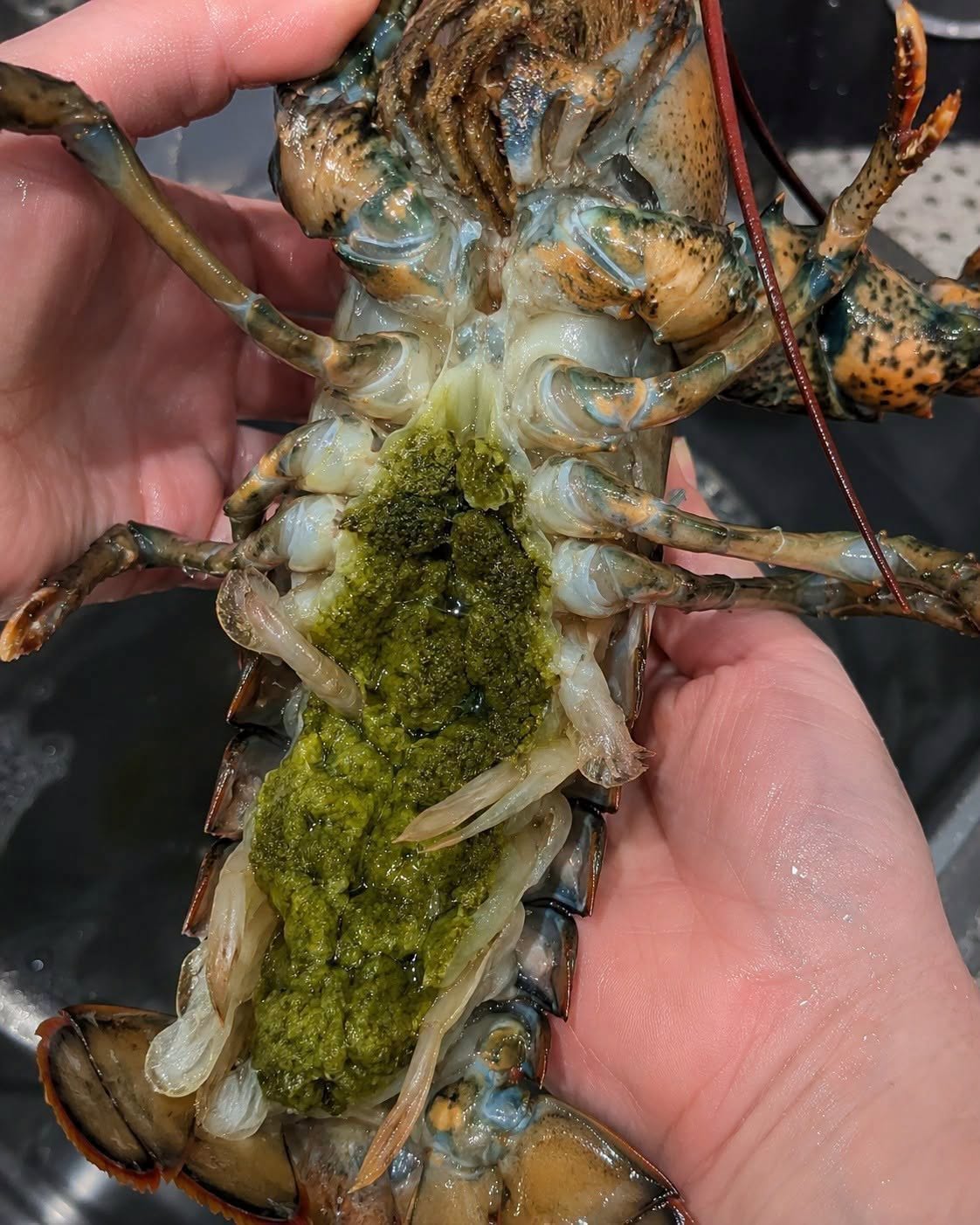
If you’ve ever opened a whole cooked lobster and discovered a bright green, soft-looking substance inside the body cavity, you’re not alone in wondering what it is.
Many first-time lobster eaters assume it’s spoiled meat, algae, or something that should be thrown away. In reality, the green material is usually tomalley — a normal part of the lobster’s anatomy and, for many seafood lovers, a prized delicacy.
Here’s what it actually is, what it tastes like, and what food-safety experts recommend.
What Is Tomalley?
Tomalley is the lobster’s hepatopancreas, an organ that performs functions similar to both the liver and pancreas in humans.
It helps the lobster:
- Digest food
- Absorb nutrients
- Store energy reserves
Because it concentrates fats and flavor compounds, tomalley has a rich, intensely briny taste that many people describe as the pure essence of lobster.
What About the Red or Orange Material?
If the lobster is female, you may also see roe (also called coral).
- Raw roe is typically dark green to blackish-green.
- Cooked roe turns bright orange-red.
Roe is edible and is often considered a delicacy in many seafood cuisines.
Continue reading on the next page…
