
- Spread on crackers or toast
- Mixed into melted butter
- Stirred into seafood chowders
- Added to pasta sauces
- Used to deepen the flavor of lobster bisque
A little goes a long way.
Nutritional Notes
Tomalley contains:
- Protein
- Fat
- Cholesterol
- Fat-soluble nutrients
Because it is an organ tissue, its nutritional profile is quite different from the lean white lobster meat.
A Common Myth: “Green Means the Lobster Is Diseased”
This is false.
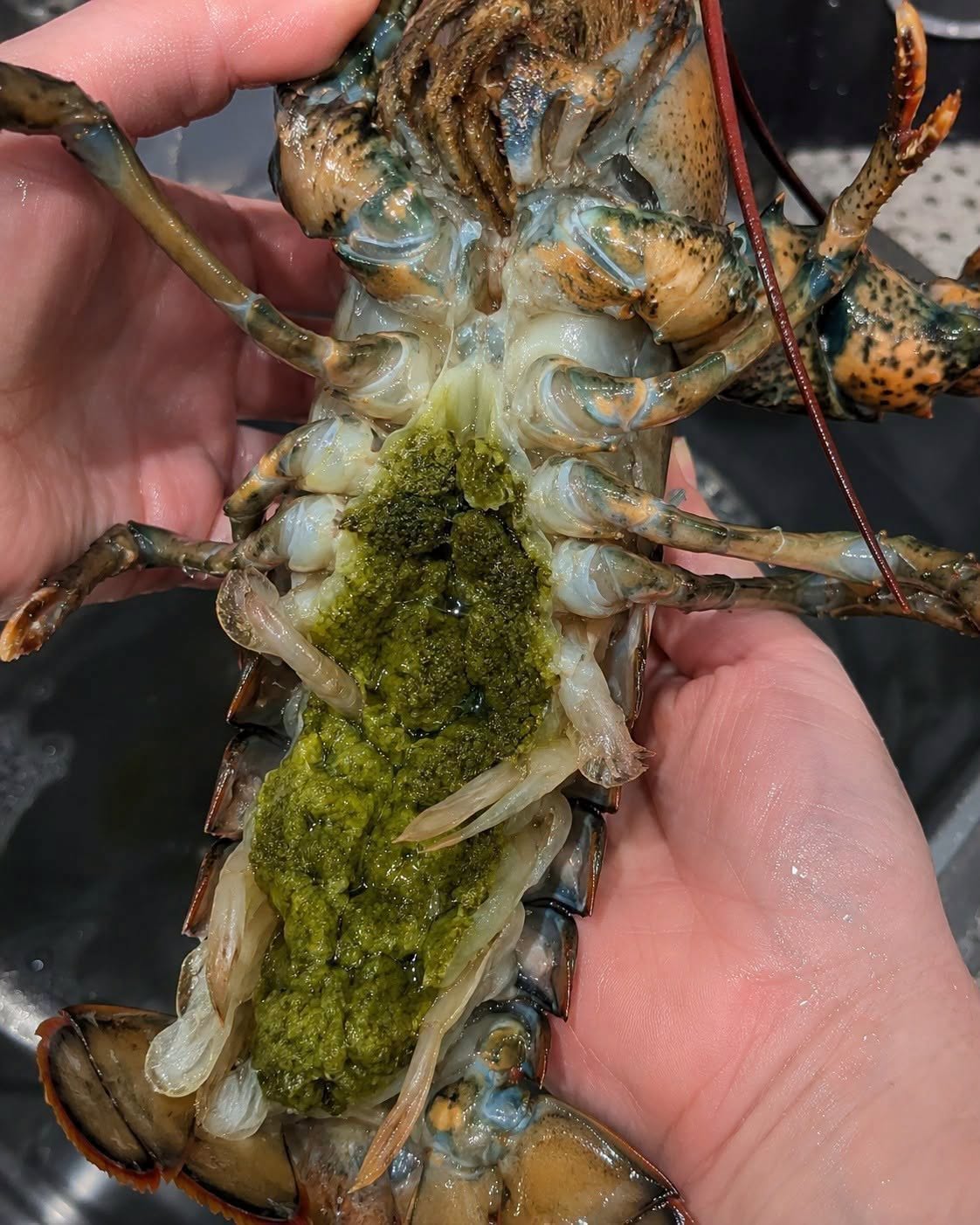
The normal green color comes from pigments and digestive contents within the hepatopancreas. A green tomalley is not automatically a sign of disease or spoilage.
Should You Eat It or Throw It Away?
There is no single right answer.
Many people choose to eat it because:
- They enjoy the flavor.
- It is considered a delicacy.
- It is traditionally consumed in many lobster-eating regions.
Others choose to skip it because:
- They prefer the taste of the meat.
- They want to minimize exposure to environmental contaminants.
- They are pregnant or serving young children.
Either choice is perfectly reasonable.
The Bottom Line
The green substance inside a lobster is usually tomalley, the lobster’s hepatopancreas (its digestive organ). It is a normal part of the animal and is widely regarded as a delicacy because of its rich, concentrated seafood flavor.
However, because this organ can accumulate environmental contaminants, many food-safety experts recommend eating it only occasionally rather than in large amounts.
If the lobster smells fresh, the meat is firm, and the green material is simply the normal tomalley, it is not automatically a sign that the lobster is spoiled. When in doubt, trust your senses: a fresh lobster should smell clean and ocean-like, not sour, rotten, or ammonia-like.
