
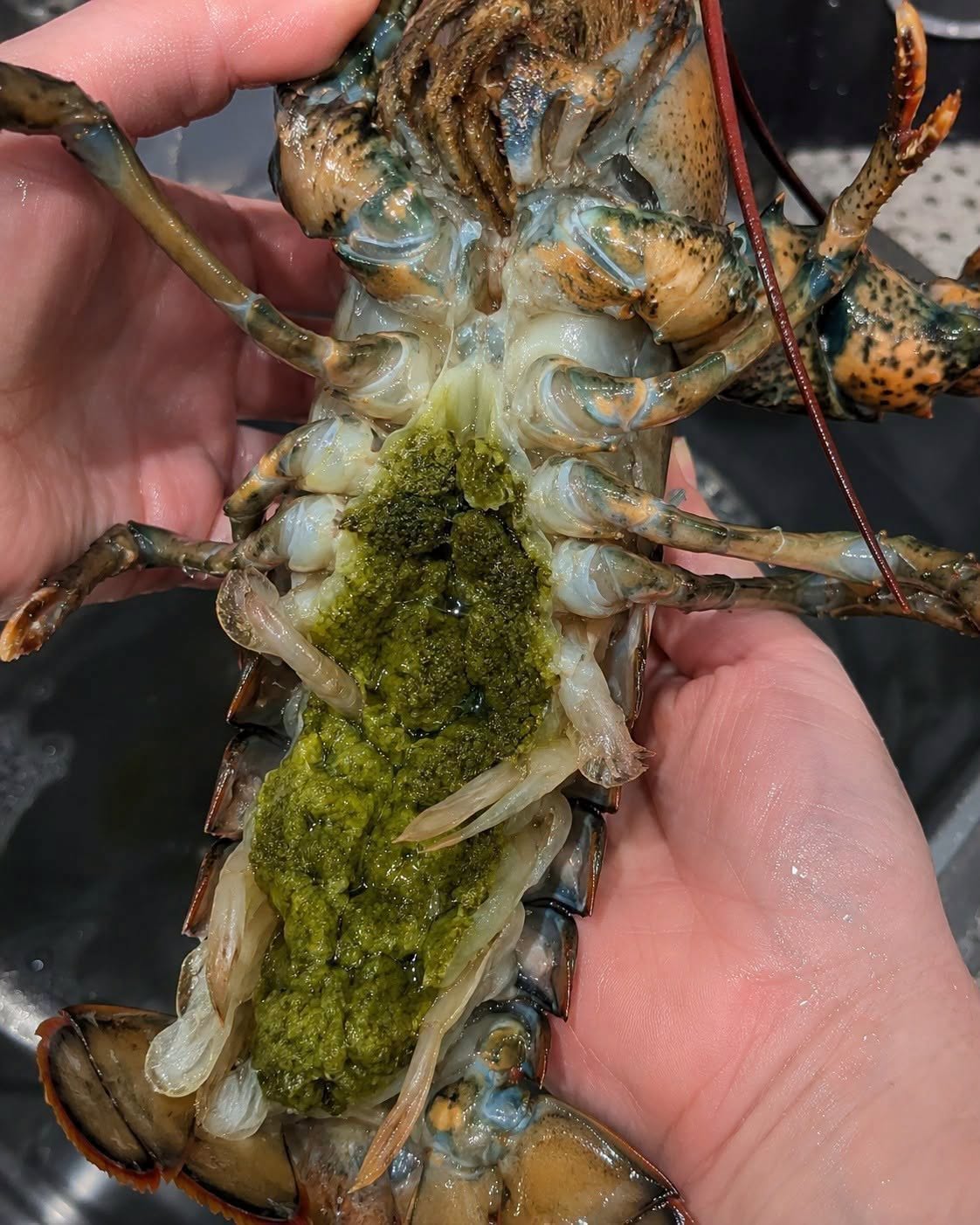
Tomalley is edible, and many people eat it regularly. However, food-safety authorities have occasionally advised limiting consumption because the hepatopancreas can accumulate environmental contaminants such as:
- Heavy metals
- PCBs (polychlorinated biphenyls)
- Dioxins
- Other pollutants present in seawater
The risk depends largely on where the lobster was harvested.
General guidance
- Occasional consumption: Generally considered acceptable for most healthy adults.
- Frequent or large amounts: Some health agencies recommend avoiding regular consumption of large quantities of tomalley.
- Pregnant people, young children, and those with certain health conditions: It may be prudent to avoid tomalley unless local food-safety authorities say otherwise.
The lobster meat itself (tail, claws, and legs) is generally the part most commonly recommended for regular consumption.
How to Tell if a Lobster Has Gone Bad
Tomalley should not be confused with spoilage.
Discard the lobster if you notice:
- A strong sour, ammonia-like, or rotten odor
- Slimy or sticky meat
- Gray, black, or discolored flesh (not the normal green tomalley)
- Mushy texture throughout the meat
- Shell damage accompanied by foul smell
Fresh cooked lobster should smell mildly sweet and ocean-like, not pungent or rotten.
How Tomalley Is Traditionally Used
In coastal cuisines, tomalley is often:
Continue reading on the next page…
